
Director Staffing Engineering Services
At Jalasoft, we strive for greatness in software development and over the years we have identified the essential skills for software development excellence. Discover the Jala Framework.

Summary: Essential Software Development Skills in 2025
-
Software development requires both technical and non-technical skills
-
Skill importance depends on system complexity and organizational context
-
Enterprise software emphasizes architecture, collaboration, and quality
-
Continuous learning is essential as platforms and AI evolve
Software development in 2026 requires more than knowing how to write code. As systems grow more distributed, data-driven, and interconnected, developers are expected to combine technical expertise with system thinking, collaboration, and adaptability.
This article outlines the essential software development skills needed in 2026, explaining not only what these skills are, but why they matter and where they are applied in real-world environments.
What Are Essential Skills for Software Development?
Essential skills for software development are the technical, analytical, and collaborative abilities required to design, build, maintain, and scale software systems.
These skills evolve as software shifts from isolated applications to complex platforms integrated with cloud services, enterprise systems, and AI-driven workflows.
Core Categories of Software Development Skills
Software development skills generally fall into four categories:
-
Technical and programming skills
-
Problem-solving and system thinking
-
Collaboration and communication skills
-
Adaptability and continuous learning
Introducing the Jala Framework for Success
Regardless of the role an engineer plays within a team, there are six essential skills for software development that must be part of an effective collaborative work culture in 2026. The Jala Framework is built upon the technical knowledge of our engineers but is also combined with clear, simple, and transparent communication processes.
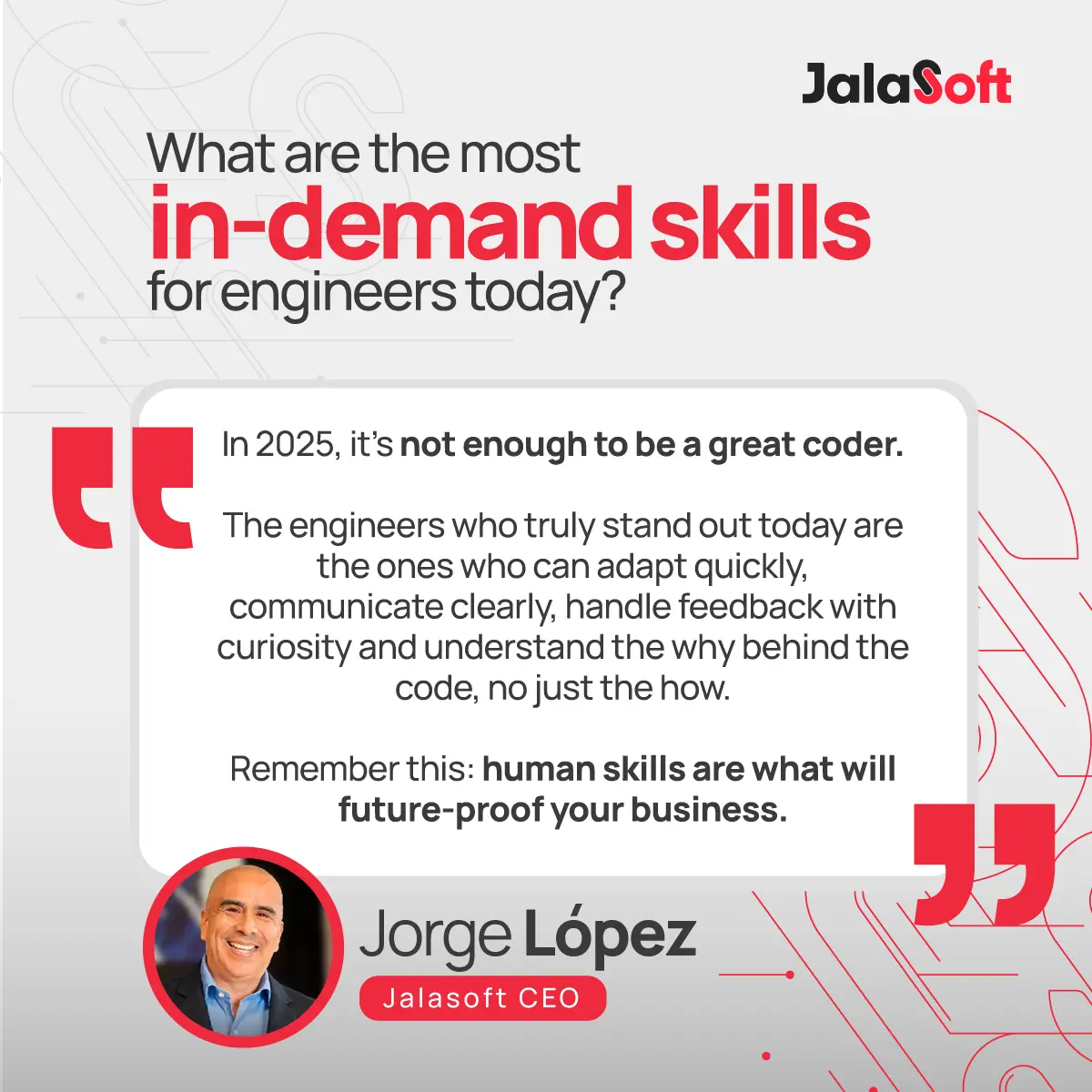
“In 2026, it’s not enough to be a great coder”, stated Jalasoft’s CEO Jorge López, “the engineers that truly stand out today are the ones who can adapt quickly, communicate clearly, handle feedback with curiosity, and understand the why behind the code, not the how.”
This combination of pillars enables us to promote a strategy that not only fosters the individual growth of our talent but also uplifts the entire team. It’s a synergy where the achievements of our clients translate into collective success.
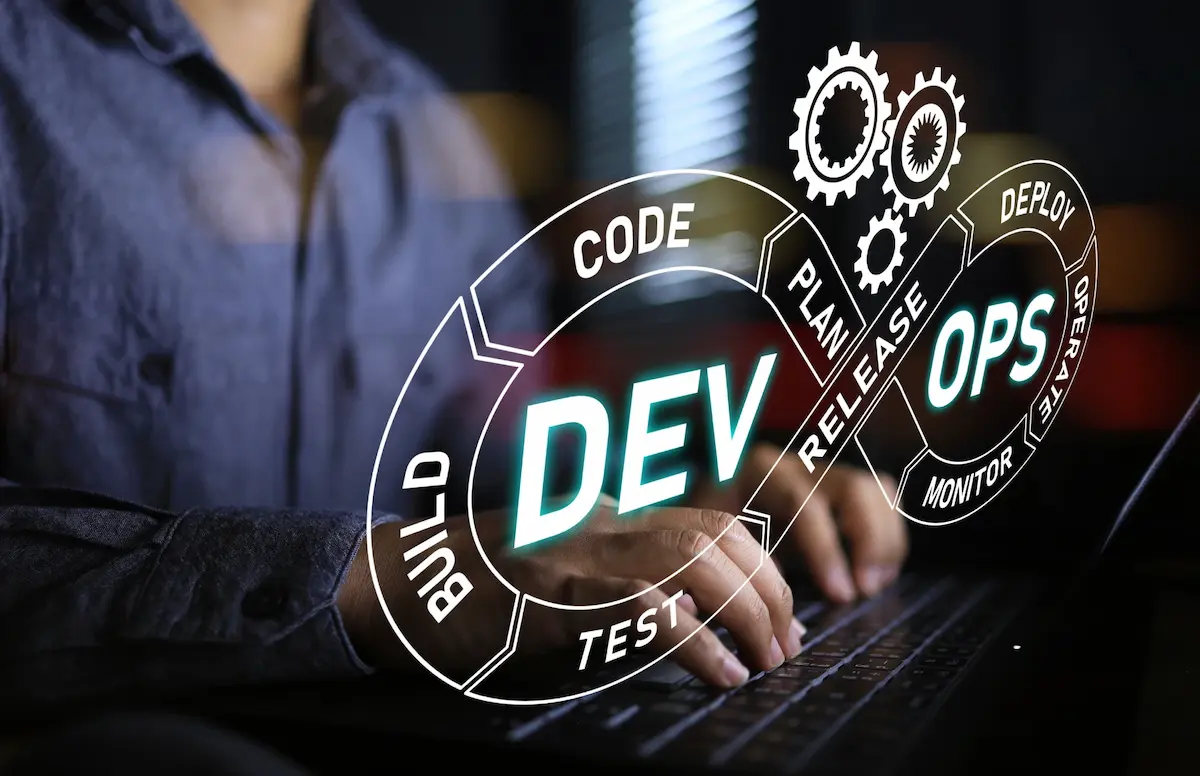
Explore comprehensive and in-depth strategies related to DevOps practices here. Discover the meaning of DevOps, learn techniques for improving collaboration between development and operations teams, optimize workflows, and more!
What are the Essential Skills for Software Development
1. Know Your Domain: Programming and Software Design Skills
To excel in any endeavor, especially in technology, understanding the domain is paramount. In the software industry, this involves gaining deep and constant knowledge about the product, its value proposition to users, and the surrounding environment. Becoming a specialist requires a meticulous review of all components, their functions, and interactions. This commitment to knowledge positions us as experts in our field.
Programming remains the foundation of software development, but in 2026 it goes beyond syntax. Developers must write code that is readable, testable, and maintainable over long lifecycles.
What this skill enables:
-
Translating business requirements into executable logic
-
Implementing algorithms efficiently
-
Maintaining large, evolving codebases
Why this skill matters in 2025:
As systems scale and teams grow, poorly designed code becomes technical debt that slows development and increases risk.
2. Commit
Commitment is the backbone of essential skills for software development. Developers make commitments constantly — during planning sessions, technical discussions, sprint reviews, and informal conversations.
These commitments define expectations and create alignment between teams and stakeholders. Honoring them builds trust and reinforces accountability as a core part of professional ethics.
What this skill enables:
-
Predictable delivery and reliable execution
-
Strong working relationships with stakeholders
-
Reduced friction caused by missed expectations
Why this skill matters in 2026:
In fast-moving, distributed teams, reliability matters as much as speed. Consistent commitment builds confidence across organizations and reduces operational uncertainty.
3. Communicate
Effective communication is the key to successful collaboration. By regularly communicating progress, identifying risks, and outlining action plans, we reaffirm the expectations set. Over-communication is embraced, ensuring that all team members are on the same page. We value asking the right questions after thorough groundwork, fostering a culture of open dialogue.
Technical skill alone is not enough to build successful software.
What this skill enables:
-
Translating technical decisions for non-technical stakeholders
-
Collaborating across roles and teams
-
Reducing misunderstandings and rework
Why this skill matters in 202:
Distributed teams and cross-functional collaboration make communication a core engineering skill.
4. Be Accountable
Accountability means taking ownership of outcomes, not just tasks. Being emotionally invested in one’s work creates a chain of trust within the team.
Developers who understand the impact of their decisions on others are more likely to deliver high-quality results and address issues proactively. Accountability transforms teams into dependable units where people can rely on one another.
What this skill enables:
-
Ownership of outcomes, not just assignments
-
Faster issue resolution and decision-making
-
Higher trust within teams
Why this skill matters in 2026:
As systems grow more interconnected, individual decisions can have system-wide effects. Accountability ensures those decisions are made responsibly.
5. Set Expectations
Setting clear expectations is the cornerstone of effective project execution. This includes defining how work will be done, what will be delivered, and when results are expected.
In teams where AI tools are part of the workflow—whether for code assistance, testing, analysis, or automation—expectation setting becomes even more critical. Teams must be explicit about how AI is used, where human judgment is required, and what quality standards still apply.
Clear, realistic expectations reduce ambiguity and help teams align priorities. When communicated transparently with clients and stakeholders, expectations build trust and enable smoother transitions throughout a project lifecycle.
What this skill enables:
-
Clear delivery timelines and scope alignment
-
Shared understanding of AI-assisted vs. human-owned work
-
Reduced rework caused by assumptions about automation
Why this skill matters in 2026:
As AI accelerates development speed, unclear expectations can create false confidence. Explicitly defining responsibilities, review processes, and outcomes ensures AI enhances delivery rather than introducing hidden risk.
6. Be Proactive
Passivity has no place in a culture of excellence. Proactivity means taking initiative, speaking up, and addressing issues before they escalate.
In modern software development, being proactive also means understanding how AI can be used responsibly to improve workflows. Proactive developers explore how AI can assist with analysis, testing, documentation, or prototyping—while recognizing its limitations and validating its outputs.
Rather than waiting for assignments, proactive developers identify opportunities where AI can reduce friction, surface insights, or accelerate learning, and then act on them with ownership and accountability.
What this skill enables:
-
Early identification of risks and inefficiencies
-
Smarter use of AI tools to support—not replace—engineering judgment
-
Continuous improvement of processes and delivery outcomes
Why this skill matters in 2026:
AI rewards initiative. Developers who proactively experiment, validate, and integrate AI into their workflows create disproportionate value, while those who wait risk falling behind as teams move faster.
Successful software development relies on effective collaboration and teamwork. Read this to explore our Nearshore Angular development services, which highlight the importance of multiple developers working together, where communication and cooperation play a vital role.
How Software Development Skills Are Applied in Real Projects
The importance of each skill varies by context:
-
Startups: versatility, speed, and full-stack capability
-
Enterprise environments: architecture, maintainability, and integration
-
Distributed teams: communication, documentation, and async collaboration
-
Long-term products: testing, refactoring, and technical debt management
Understanding context is as important as mastering individual skills.
Common Gaps in Modern Software Teams
Even experienced developers often struggle with:
-
Translating business requirements into scalable architecture
-
Maintaining long-lived systems under continuous change
-
Balancing speed with code quality
-
Understanding system-wide impact of local changes
Closing these gaps requires experience, mentorship, and structured development practices.
The Jalasoft Approach
The skills described in this article are not abstract ideals. They reflect how Jalasoft engineers are formed, evaluated, and expected to operate in real delivery environments.
Because software success depends on certainty, continuity, and accountability, these principles shape how we design, build, and operate technology end to end. Domain understanding, clear commitments, strong communication, accountability, expectation setting, and proactivity are treated as execution disciplines—not personal traits.
This approach is reinforced by Jalasoft’s proprietary talent engine, where engineers are built through a combination of structured education, hands-on R&D, and real product experience. The goal is not capacity, but predictable execution and reduced delivery risk over time.
In practice, these principles define how Jalasoft teams work—and why they are able to deliver complex software with consistency and accountability.